Darklight: Revealing Architecture Through Light
Darklight: Revealing Architecture Through Light
When light exists without revealing its source.
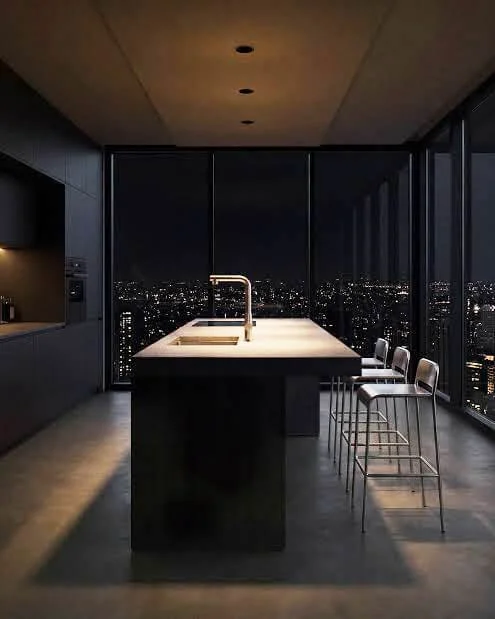
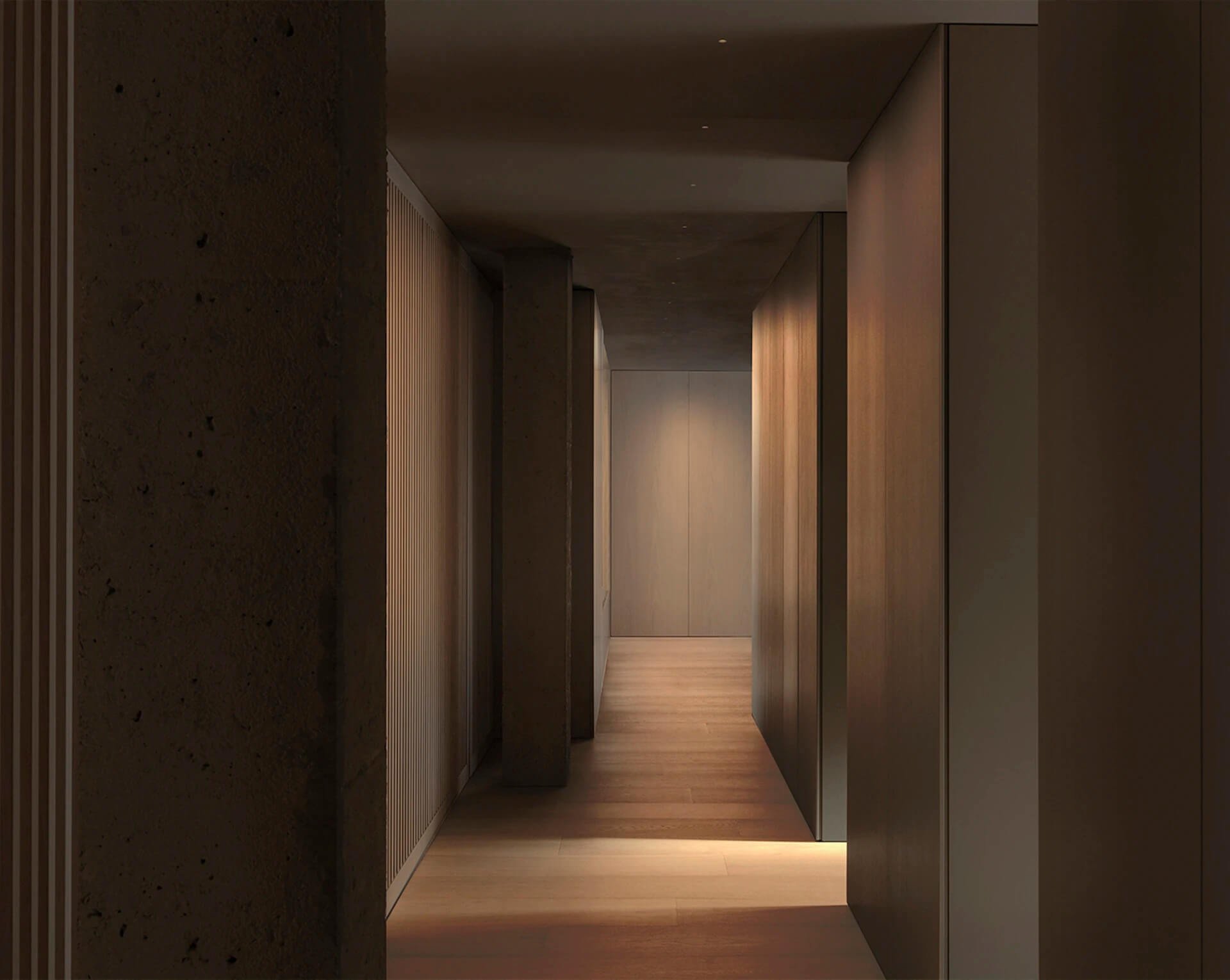
Darklight lighting design focuses on the effect of light within a space. Through precise optical control, the luminaire recedes from attention, allowing the architecture to take the leading role.
This approach to architectural lighting shifts our perception towards the materials, surfaces and volumes revealed by illumination. The light source becomes visually discreet, while its effect gives the space depth, definition and atmosphere.
At RICHE, we embrace darklight as a comprehensive design philosophy that extends beyond aesthetics to shape how a space is experienced.
Light, Not Luminaires: The Principle of Darklight
The principle is seemingly simple: to perceive the light without becoming acutely aware of its source.
Depending on the luminaire, this is achieved through a deeply recessed light source, specialised optical systems, precisely engineered reflectors and shielding elements that restrict direct views of high-luminance components.
Within the intended shielding range, the bright source remains concealed from typical lines of sight. It may become visible as the observer moves beneath the luminaire or looks into its light-emitting aperture, depending on the optical geometry and installation.
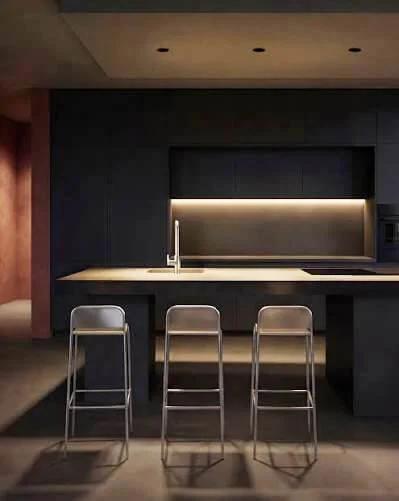
The result can be a visually quiet ceiling, with fewer bright apertures competing for attention.
Light appears to emerge without an immediately apparent source.
Visual Comfort Through Glare Control
Shielding the light source from direct view serves an essential role in visual comfort.
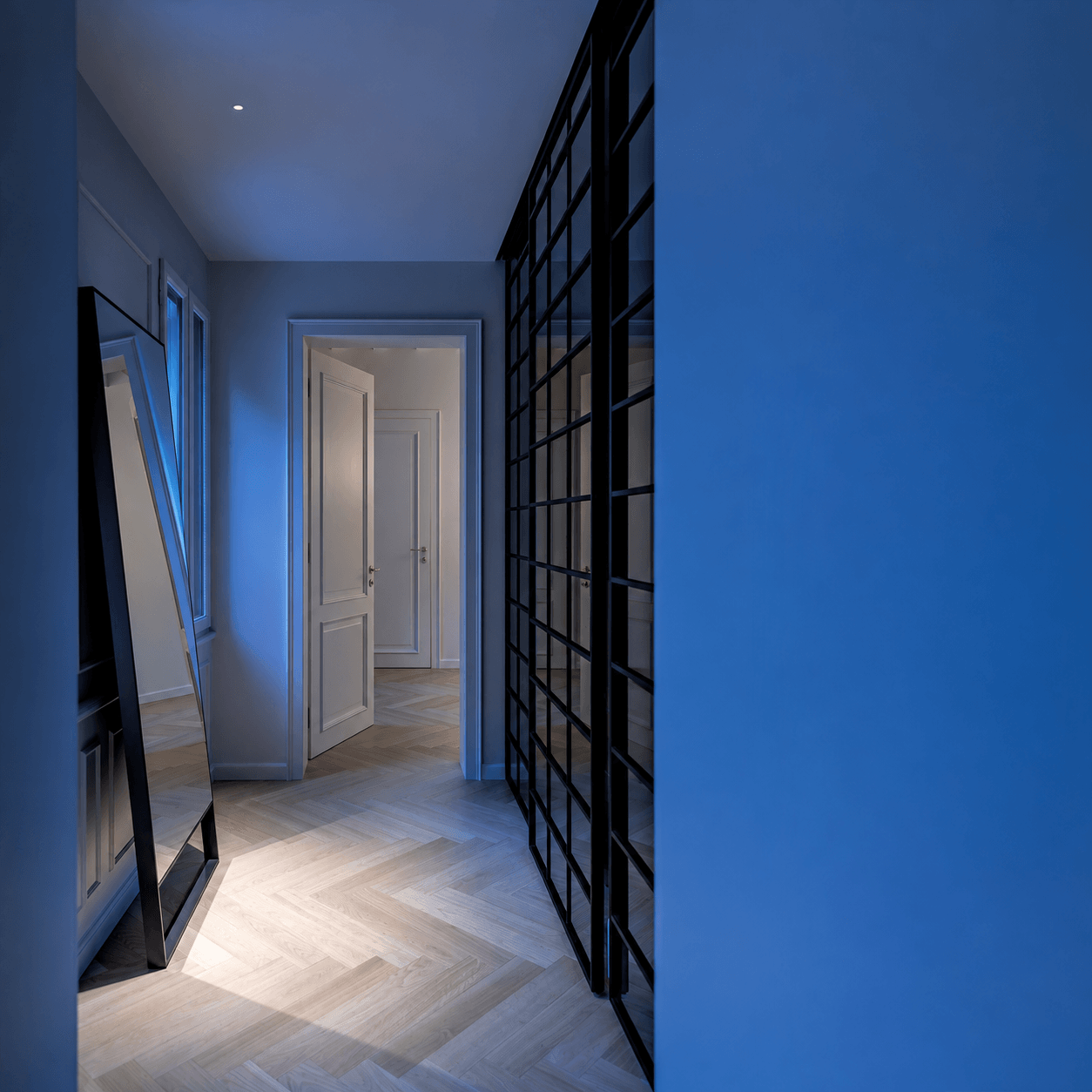
Reduced direct glare, precise beam control and the limitation of unwanted spill light help minimise distractions from high-luminance sources within the field of view.
Visual comfort also depends on the wider composition: the balance of luminance across the space, the reflective properties of materials and the relationship between the luminaires and the observer.
When these elements are considered together, the environment can feel calmer and more coherent.
Attention shifts towards the architecture, its details and the experience of occupying the space.
Designing with Darkness: Light, Shadow and Spatial Hierarchy
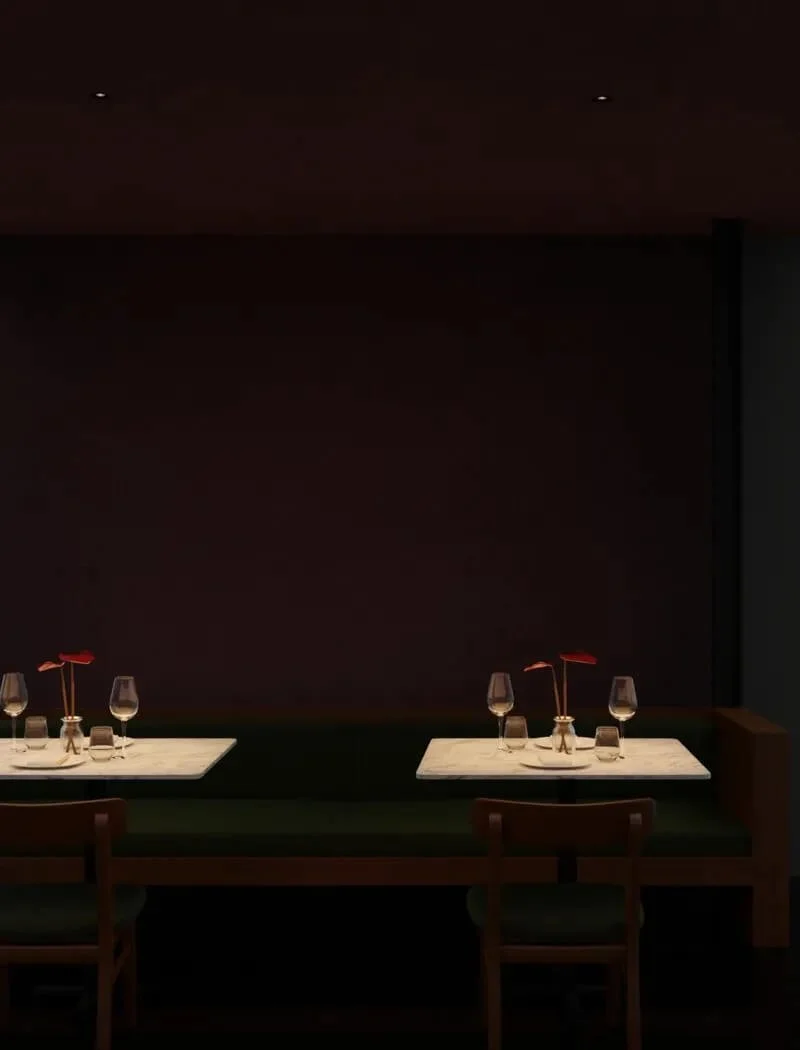
Within RICHE’s approach to darklight, darkness becomes an active component of the lighting composition.
Light and shadow are designed together to establish visual hierarchy, depth, contrast and direction. Rather than giving every surface equal emphasis, the design determines what should be revealed and what may remain in shadow, while meeting the functional lighting requirements of the space.
Through this process, light acquires an architectural presence.
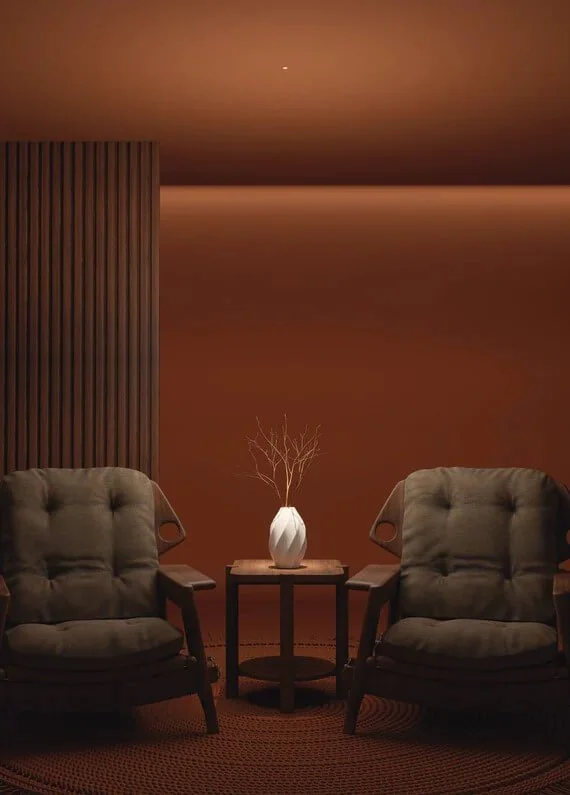
It can articulate the texture of a surface, reveal the geometry of a volume, guide the eye or establish a focal point without the luminaire itself demanding visual attention.
A material gains definition. A recess acquires depth. A sequence of illuminated surfaces creates a rhythm through the interior.
Optical Precision Behind Visual Discretion
The apparent simplicity of a darklight environment depends on rigorous lighting design.
Light-source recess depth, shielding and cut-off angles, optical distribution, luminaire positioning and the relationship to the occupant’s lines of sight all influence the final result.
Where available within the selected luminaire system, narrow spot, flood and oval distributions, alongside dedicated wallwashing optics, are specified according to both the required illuminance and the intended perception of the architecture.
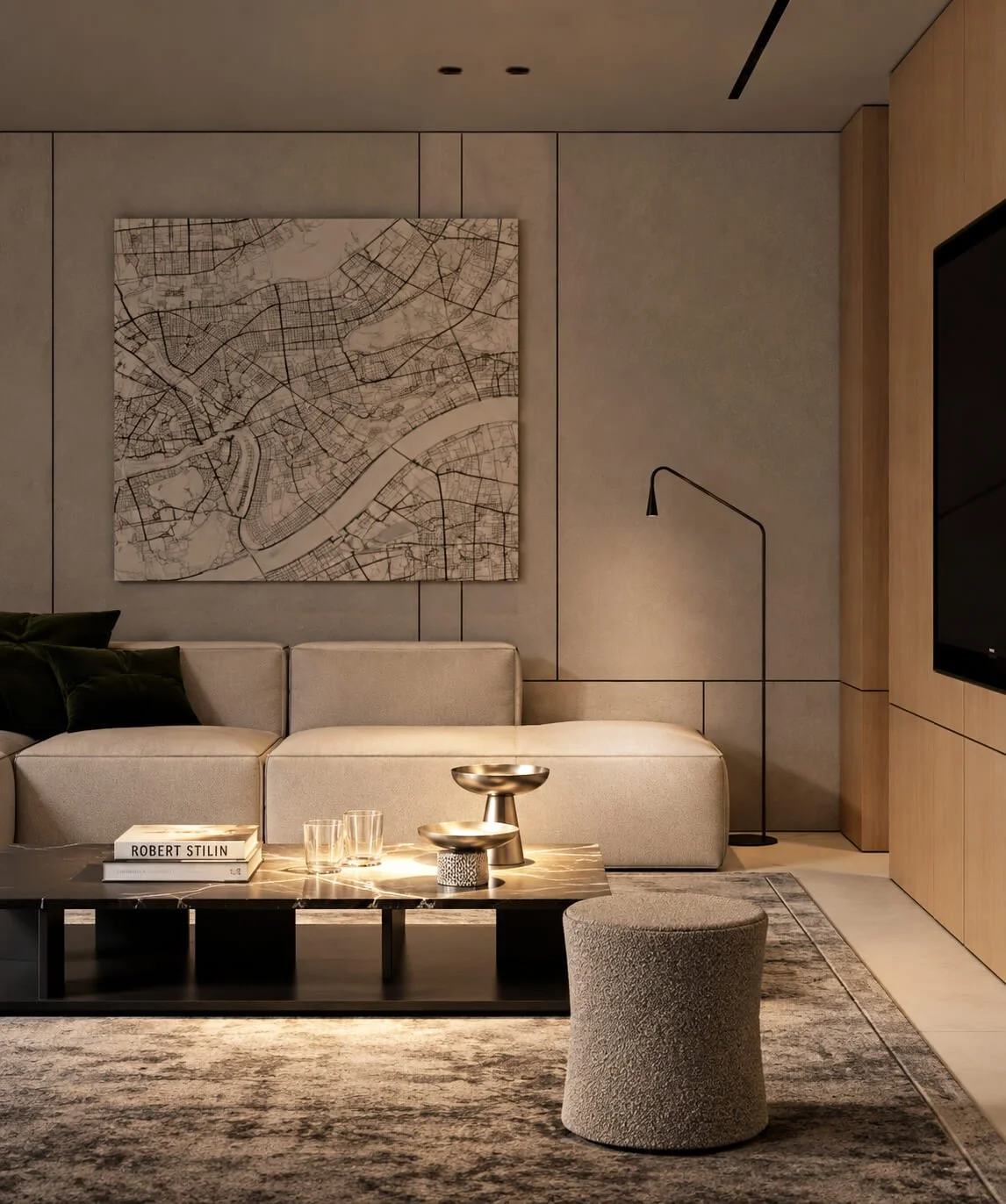
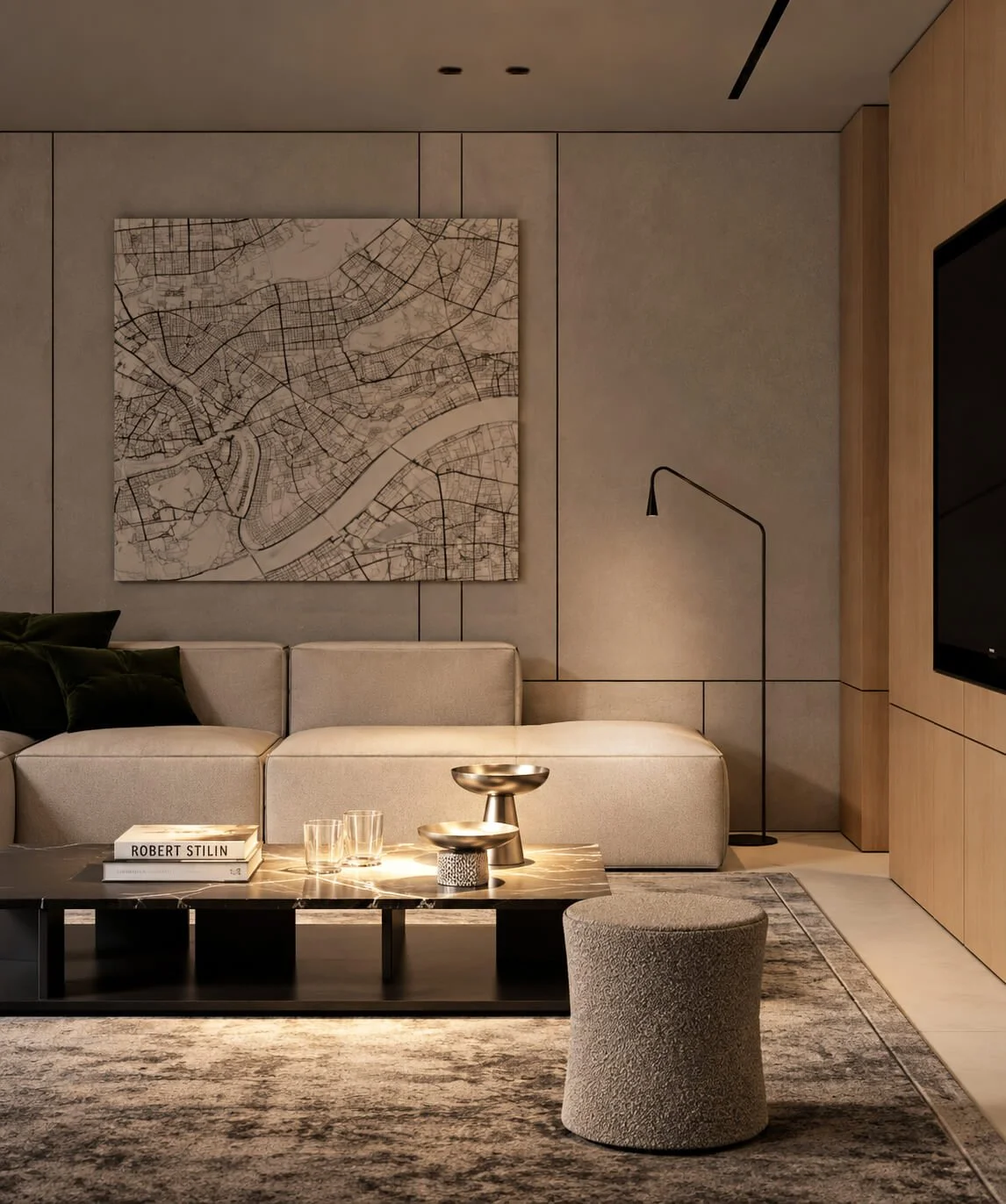
A focused beam can establish a distinct accent. A wider distribution can connect a group of elements. Wallwashing can give a vertical surface a more continuous presence within the space.
Where greater visual discretion is required, matte black baffles and internal finishes can help suppress unwanted internal reflections and reduce the apparent brightness of the luminaire aperture.
Their colour alone, however, does not define darklight performance. The quality lies primarily in the optical engineering and its integration into the lighting scheme.
Architecture Experienced Through Light
The value of darklight ultimately lies in the human experience.
When the source no longer competes for attention, there is more room to observe.
Architectural forms become more legible.
Materials reveal greater depth.
Contrasts become more deliberate.
The eye is guided naturally through the space.
A carefully composed visual field can contribute to a sense of calm, allowing the interior to be experienced as a coherent whole.
Light becomes an integral part of the architecture.
RICHE’s Approach to Darklight Lighting Design
At RICHE, our architectural lighting design brings together optical precision, material sensitivity and an understanding of spatial experience.
We consider where light should fall, how surfaces will respond and how the composition will be perceived from the positions people occupy throughout the space.
Our lighting design projects explore this dialogue between light, material and architecture.
We do not perceive the source first.
We perceive the space as it was designed to be experienced.
For us, this is the essence of darklight lighting design.
Discuss your project with RICHE.
RICHE — Beyond illumination. We design how space feels.